
Huntsville Pedestrian Accident Lawyer Near Me
Huntsville, AL: Pedestrian Injury Attorney Near Me
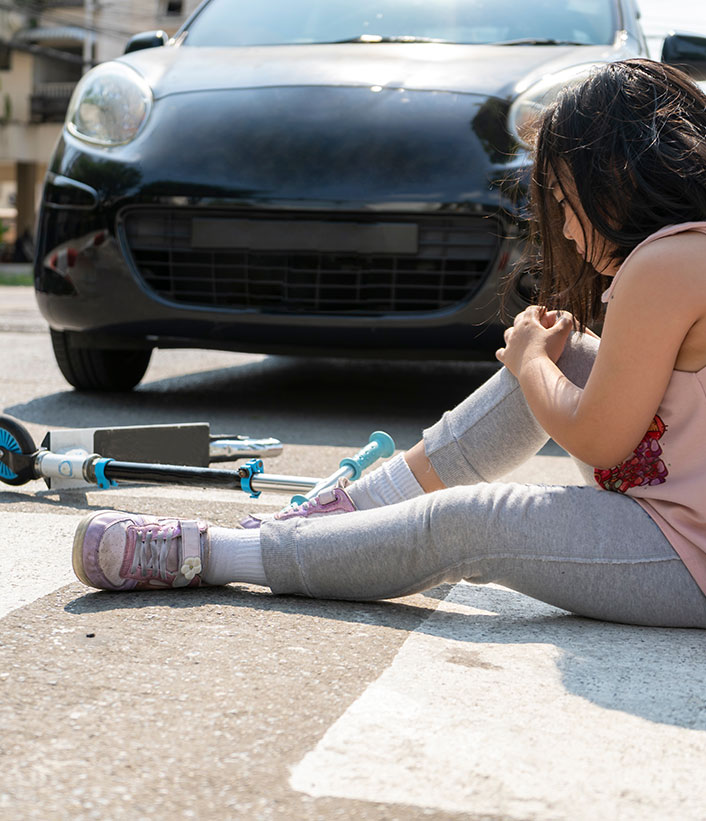
Have you or a loved one been seriously injured or killed while walking in Alabama? Approximately 5,000 pedestrians are killed every year in the United States. According to data from the Governors Highway Safety Association, the number of pedestrian fatalities in the United States has grown substantially faster than all other traffic deaths. An estimated 7,342 pedestrian fatalities occurred in 2021, an increase of 13 percent from the previous year. If you have been seriously injured by a negligent driver while walking along the streets of Huntsville, Alabama, it is of utmost importance to call a pedestrian accident attorney now. Randy Ferguson is a pedestrian accident lawyer and offers free consultations to all pedestrian accident victims. We know you have questions. Let our team help cut through the red tape and get you the compensation you deserve. Call 256-534-3435 for immediate assistance from one of our attorneys. We are here to help.
Alabama Pedestrian and Automobile Driver Laws
Alabama has several right-of-way laws that apply to pedestrians. These laws exist to protect vulnerable pedestrians. A number of pedestrian-versus-vehicle collisions in Alabama occur because motorists fail to follow these laws.
- Motorists must never drive on sidewalks that are designated as safe routes for pedestrians.
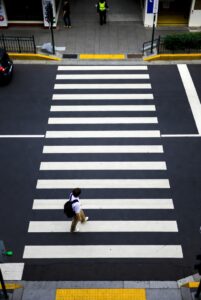
- Drivers must stop and yield the right-of-way to pedestrians who are crossing in marked or unmarked crosswalks or at intersections. Motorists should wait when other vehicles are stopped at a crosswalk. Vehicles that are stopped may be letting pedestrians cross.
- Motorists must also stop and yield the right-of-way to pedestrians and other vehicles, especially when pulling out of parking lots or driveways.
- Motorists must allow older, younger, and disabled pedestrians ample time to cross the road.
- Even when a pedestrian is walking outside a crosswalk, a motorist is expected to exercise due caution.
Rules of the road for pedestrians:
- Alabama pedestrians do not automatically have the right of way in all situations. Just like drivers, pedestrians must obey all traffic signals specific to them (AL Code §32-5A-210).
- Pedestrians in Alabama cannot leave a designated crosswalk when a vehicle is so close as to constitute an immediate danger (AL Code §32-5A-211b).
- If a sidewalk is available for use, a pedestrian must use the sidewalk and not the adjacent roadway (AL Code §32-5A-215).
Rules of the road for drivers:
- Drivers shall yield the right of way to any blind pedestrian carrying a white cane or accompanied by a guide dog (AL §32-5A-220).
- While pedestrians have a responsibility to obey the law, drivers have the ultimate responsibility to avoid a collision with a pedestrian if at all possible, even when the pedestrian is in the wrong.
- Drivers must exercise due care to avoid colliding with any pedestrian (AL §32-5A-213).
- If another driver stops to allow a pedestrian to cross at a crosswalk or at an intersection, any other driver shall not overtake or pass such a stopped vehicle (AL §32-5A-211).
Pedestrian Accident Injuries
Huntsville pedestrian accidents are often catastrophic. Every accident involving a pedestrian is different, and the extent of injuries suffered will vary between cases. The most common types of injuries we deal with on a daily basis include the following:
- Broken bones: fractures to legs and arms due to the impact of the vehicle.
- Paralysis: Cervical spine injuries.
- Burns and scarring: scars caused by surgery or injuries from the accident.
- Loss of limbs: amputations that affect the ability to work and enjoy life.
- Spinal cord injuries: back and neck injuries that cause pain and an inability to function normally.
- Head injuries: Traumatic brain injuries (TBIs) can cause lifelong problems.
- Joint, muscle, back, neck, and bone injuries often require surgical intervention and physical therapy.
- Brain injuries: traumatic brain injuries.
- Knee injuries: ligament and tendon damage often require surgery.
- Whiplash: soft tissue injuries.
- De-gloving: injuries where skin and muscle are away from the bone.
- Wrongful death: In Alabama, you can recover punitive damages only.
- Internal injuries: internal injuries to the liver, lungs, kidneys, or heart.
Causes of Huntsville Pedestrian Accidents
A pedestrian can be injured by a wide range of factors, from improperly designed intersections to inattentive driving. Pedestrians have certain rights when using public roads or crossing intersections. It only takes a second for a distracted, intoxicated, or careless driver to cause serious injuries. Some of the main causes include the following:
- Driver inattentiveness: speaking on a cell phone, reading, grooming, texting, eating or drinking while driving, changing the radio station, programming a GPS, putting on makeup, and many other activities can distract a driver and cause accidents.
- River confusion: In Huntsville, many drivers are unfamiliar with the city roads and one-way streets. When drivers are trying to read a map or street signs, they can overlook pedestrians and cause serious accidents.
- Aggressive driving: violating traffic signals and signs, right-of-way violations, incidents of road rage, improper turning, and unsafe speeds are among the top causes of pedestrian accidents.
- Dangerous intersections: Sometimes the design of the intersection itself causes or contributes to the accident.
- Walkers’ confusion: jaywalking, or crossing in the middle of the street, outside of a crosswalk
- Violating Laws: crossing against the traffic signal (i.e., in the crosswalk but against a red “Do Not Walk” command)
- Drinking Alcohol or Drugs: entering a street or highway while intoxicated, and
- Walking Roadways: Walking along highways, bridges, or causeways where pedestrian access is prohibited.
- Illegally parked cars make it difficult to see pedestrians and bicycles.
- Using an electronic communication device.
- Texting: texting while driving.
- Talking to passengers: being distracted by talking to children and adult passengers.
- Ting and drinking: eating or dropping food or drinks, causing an accident.
- Adjusting the radio: adjusting the radio and taking your eyes off the road.
- Reading map or street signs: Reading a map or looking for signs often when lost or on unfamiliar road
- Turning at intersections without looking both ways
- Driving too fast to be able to safely stop in time
- Design defects in crosswalk locations, including failure to consider upstream and downstream traffic flows
Damages Recoverable for Serious Pedestrian Injuries
If you suffered a serious injury or your loved one was tragically killed in a pedestrian accident, you may be able to file a lawsuit to collect monetary compensation for the damages associated with your injury or loss, including:
- Medical bills
- Lost earnings and wages
- Impaired earning capacity
- Life care costs
- Occupational rehabilitation
- Disfigurement
- Loss of relations
- Pain and suffering
- Property damage
- Punitive damages in wrongful death cases.
PEDESTRIAN INJURY STATISTICS
Pedestrian traffic accidents occur nearly 215 times a day. According to the Centers for Disease Control and Prevention (CDC), a pedestrian dies in the U.S. about every 88 minutes, resulting in nearly 6,000 deaths a year. Nearly 70% of pedestrian fatalities are men. Confusion, talking on the phone, texting, eating, and inattention are the two main reasons that accidents take place. Males have a high occurrence of accidents, along with young people, smaller children, of course, and then the elderly.
According to a 2019 report from the Alabama Department of Transportation, pedestrian injuries and pedestrian deaths are rapidly increasing. According to the GHSA, in 2019, 6,205 pedestrians were killed in traffic crashes in the United States. This is a 2.7% decrease in pedestrian fatalities from 2018. Additionally, an estimated 137,000 pedestrians were treated in emergency departments for nonfatal crash-related injuries in 2017. Almost half (47%) of crashes that resulted in a pedestrian death involved alcohol for the driver and/or the pedestrian. On average, a pedestrian was killed every two hours and injured every eight minutes in traffic crashes. Pedestrians are 1.5 times more likely than passenger vehicle occupants to be killed in a car crash. In 2017, pedestrian deaths accounted for 16 percent of all traffic fatalities and made up 3 percent of all the people injured in traffic crashes. On average, a pedestrian was killed every 88 minutes in traffic crashes in 2017. Pedestrians aged 65 and older accounted for 20% of all pedestrian deaths and an estimated 10% of all pedestrian injuries in 2017. One in every five children under the age of 15 killed in traffic crashes was a pedestrian in 2017. More than two-thirds (70%) of the pedestrians killed in traffic crashes were males in 2017. In Alabama, there were an estimated 59 pedestrian deaths between January 2017 and June 2017. That’s a rate of 1.21 per 100,000 people and the 8th highest rate in the country.
Nearly 80 percent of pedestrian accidents occur during nighttime hours. Over 80 percent of pedestrian-car crashes happen in cities. Nearly 75 percent of pedestrian-car accidents happen away from intersections. Roughly 25 percent of all crashes involving pedestrians occur when a driver is making a left turn and does not see the pedestrian. In almost half of pedestrian-car crashes, either the driver or the pedestrian had been recently drinking.
Pedestrian Safety Tips
Pedestrians should always try to do the following to stay safe while walking:
- Always use designated crosswalks.
- Make sure you never play, push, or shove others when you walk around in traffic.
- Carry a flashlight at night and wear reflective clothing, such as reflective clothes or vests.
- Watch for cars backing out of driveways and parking spaces.
- Walk on a sidewalk or path instead of the road.
- Walk on the shoulder and face traffic if a sidewalk or path is not available.
- Do not drink alcohol before or while walking on the streets.
- Pay close attention if wearing headphones and/or talking on the phone.
- If a crosswalk or intersection is not available, locate a well-lit area where you have the best view of traffic.
- Never assume a driver sees you.
- Make eye contact with drivers as they approach to make sure you are seen.
- Maintain control of your dog while walking.
- Wear sunglasses when walking in blinding sun.
- Children exiting buses should look left-right-left for cars before crossing a street.
Safety Tips For Motor Vehicle Drivers
Drivers should always try to do the following to prevent accidents with pedestrians:
- Never drink alcohol or use illegal or prescription drugs that affect driving.
- Watch for pedestrians everywhere.
- Slow your speed in residential areas where children and pets might be playing.
- Slow your speed at night and in bad weather.
- Slow down and be prepared to stop when turning or otherwise entering a crosswalk.
- Yield to all pedestrians.
- Never pass vehicles stopped at a crosswalk.
- Always stop for school buses.
- Follow the speed limit and traffic signs.
- Be careful in school zones and slow down.
- Always look before backing out of parking spaces and driveways.
Frequently Asked Questions About Pedestrian Accidents in Alabama
If you have suffered an injury in a pedestrian accident, you probably have questions. The most common questions we are asked include the following:
How much is my case worth?
Each pedestrian accident case is different. The value of your cases depends on your medical bills, injuries, insurance available, and many other things. You can recover from:
- Past and future medical bills: ambulance, doctors, surgery, hospitalization, physical therapy, MRIs, X-rays, injections, medications, and adaptive medical devices.
- Lost wages, including diminished future earning capacity: You can recover past and future lost wages.
- Pain, suffering, and emotional distress: All of the pain related to physical injuries incurred in the accident.
- Rehabilitation and nursing services: Costs to do rehab and in-home nursing care.
- Permanent impairment and/or disfigurement: Compensation for scarring, amputations, and permanent impairments that limit ability to work.
- Wrongful death: Damages for the death of your loved one.
When a car hits a pedestrian, who is at fault?
Every accident is unique. Was the driver texting or violating the law? Did the pedestrian jaywalk or walk out into traffic? It all depends on the facts of your case. Our pedestrian accident attorneys can help you determine liability.
What is Bodily Injury Liability Coverage?
In Alabama, every car owner must have bodily injury liability coverage on their car insurance policy. This coverage applies to any injuries to the pedestrian that are caused by the insured driver. The minimum amount for bodily injury liability coverage is $25,000/person and a maximum of $50,000/accident.
What should I do after a pedestrian accident?
Always call 911 and do an accident report. Get names and numbers of witnesses and get medical treatment immediately. Do not talk to the insurance company before you talk to an attorney. Do the following:
- Call for the police and an ambulance for immediate medical attention.
- Do not admit anything to any of the parties or the police.
- Get witness information.
- Exchange contact and insurance information with all parties involved in the accident.
- Do not speak with the insurance adjusters before talking to us.
- Take photos of the accident scene, the vehicles involved, and any injuries you sustained.
- Don’t sign any release forms or checks before speaking with an attorney.
Can I File a Lawsuit if My Family Member Was Killed?
Yes. In Alabama, you can only recover punitive damages.
How Long Do I Have To File A Lawsuit?
2 years in Alabama.
What should I do after being hit as a pedestrian?
Seek immediate medical attention, call the police, document the scene with photos, get witness information, and contact a pedestrian accident lawyer as soon as possible.
Are drivers always at fault when they hit a pedestrian?
In most cases yes. Drivers have a duty to watch for pedestrians, especially in crosswalks. However, comparative negligence rules in Alabama may apply.
What compensation can a pedestrian recover?
Medical bills, lost wages, future medical care, pain and suffering, permanent disability, scarring, and loss of quality of life.
Why Hire a Pedestrian Accident Attorney? Attorneys Ferguson and Ferguson
Even if it’s clear who is responsible for your pedestrian accident, the insurance company will try everything it can to not give you a fair settlement. The law offices of Ferguson and Ferguson take pride in giving each client individual and personal attention.
- We are committed to excellent client service.
- We care about our clients and have patience.
- Free phone consultation 7 a.m. to 7 p.m. and Saturdays
- Free office consultation as late as 7 p.m. and on Saturdays also
- Locations near you
- Answer all our clients’ calls or return them promptly.
- We keep our clients informed of the status of their case.
- We make sure that our clients understand each step of their case.
- We have great compassion for the physical, emotional, and financial problems that our clients suffered and will do everything possible to get them through their difficult times.
Contact a Pedestrian Accident Lawyer Today
If you have suffered a pedestrian-related traffic injury in Decatur or Huntsville, Alabama, you can pursue the liable party for your injuries. Our seasoned pedestrian accident attorneys have already handled thousands of cases involving pedestrians. If you or someone you love is injured in a pedestrian-related accident, call Ferguson & Ferguson. Call 256-534-3435 or 256-350-7200. Remember, your consultation is free, and you pay nothing unless we win your case! We are here to help.
Huntsville Office Location:
303 Williams Avenue SW
Suite 321
Huntsville, AL 35801
Pedestrian Resources
- American Traffic Safety Services Association – An international roadway safety organization representing the highway safety industry.
- CDC: Alcohol Involvement in Pedestrian Fatalities – A study from the U.S. Centers for Disease Control and Prevention (CDC) highlighting the involvement of alcohol in fatal pedestrian accidents.
- Insurance Institute for Highway Safety / Highway Loss Data Institute: Pedestrians and Bicyclists – Information about pedestrian accidents and deaths, with fatality statistics, state laws, and status reports.
- National Highway Traffic Safety Administration – Information about automobile and child safety product recalls, safety issues such as distracted driving, and auto research.
- NHTSA’s Pedestrian Safety Page – Information on how to reduce pedestrian injuries and fatalities, including research, statistics, and educational activities for children.
- Federal Highway Safety Administration’s Pedestrian & Bicycle Safety Page – A collection of facts, tips, and data on pedestrian accidents and safety with the most recently available statistics.
- Safe Kids USA – Pedestrian Safety – Resources on how to keep children safe on the road, with information specific to different children’s age groups.
- Review of Studies on Pedestrian and Bicyclist Safety: 1991-2007 (NHTSA) – A comprehensive summary of multiple studies involving pedestrian and bicyclist safety from 1991 to 2007.
- National Center for Safe Routes to School—An educational and advocacy group to advance safety programs for children in regard to safe walking and biking routes to schools.
Our pedestrian accident firm handles cases in the following Alabama cities and counties: